Pay less to get paid.
Provider fees, cross-border charges, another integration to maintain. It all comes out of your margin. Route each payment by cost and success rate across your connected providers, offer lower-cost local ways to pay, and keep everything on one integration.

One integration. Every provider you already trust.







Your payment path is hiding costs.
A payment costs more than the fee on your invoice. Where your customer is, how they pay, which provider handles it and the engineering that keeps it running all add to the bill.


Take control of what each payment costs you.

Give your payments more than one option
Connect several providers through one integration and decide who handles what. When your volume can move, the best price wins it.
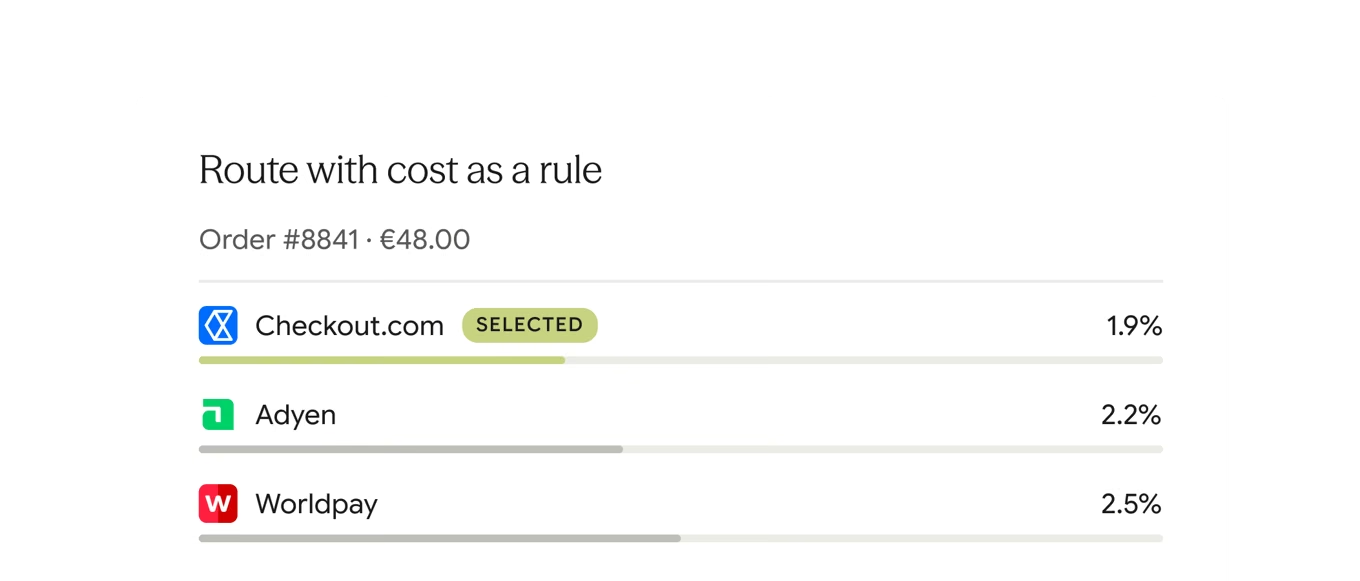
Make cost one of your routing rules
Set cost as a routing factor alongside country, method and provider performance. Send foreign cards to a local acquirer, or co-branded debit cards to a lower-cost local scheme where available.

Go local and pay lower fees
Bank payments and local wallets often cost less to accept than cards. Show customers the methods they already trust in their market, in the same checkout, on the same integration.

Add providers without adding work
New providers plug into the integration you already have, with routing, refunds and reporting ready. You don't spend money and time on new separate builds.
See the cost decision behind each payment.
Payment comes in
It’s checked against your cost rules.

Options compared
Each connected provider’s cost is weighed.

12:04:32
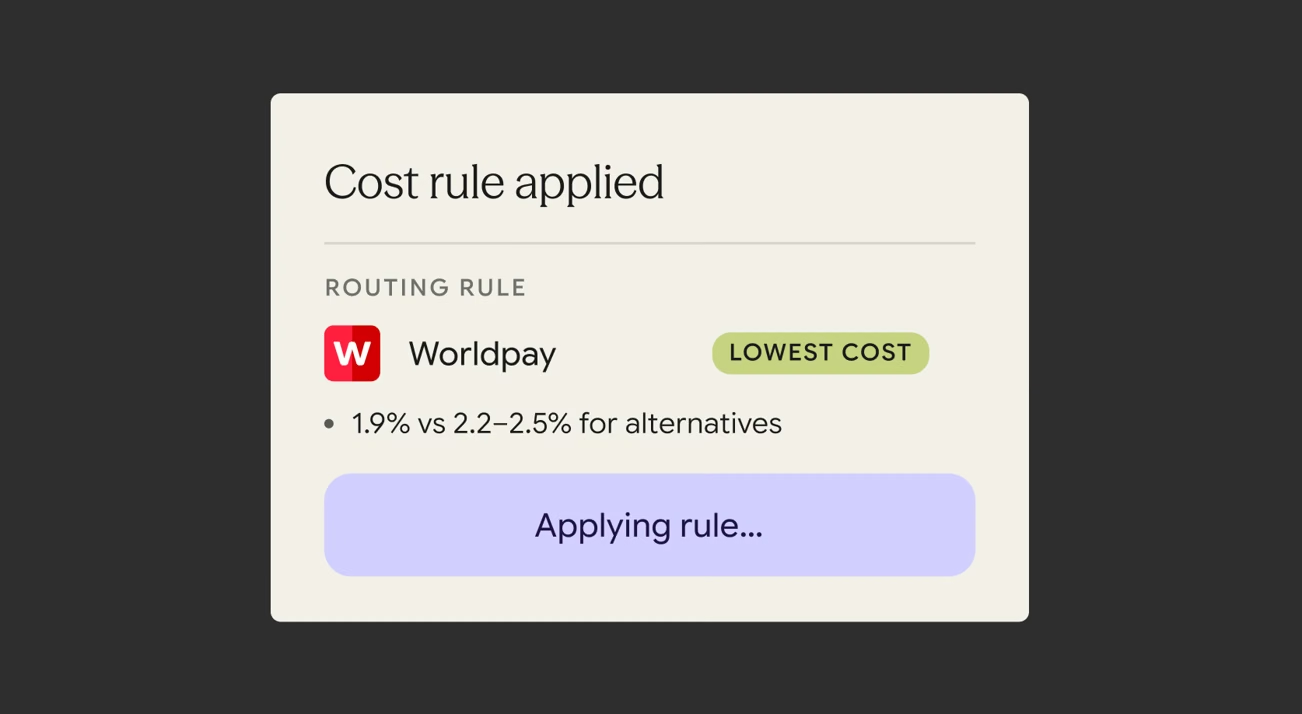
Cost rule applied
Lower-cost route selected
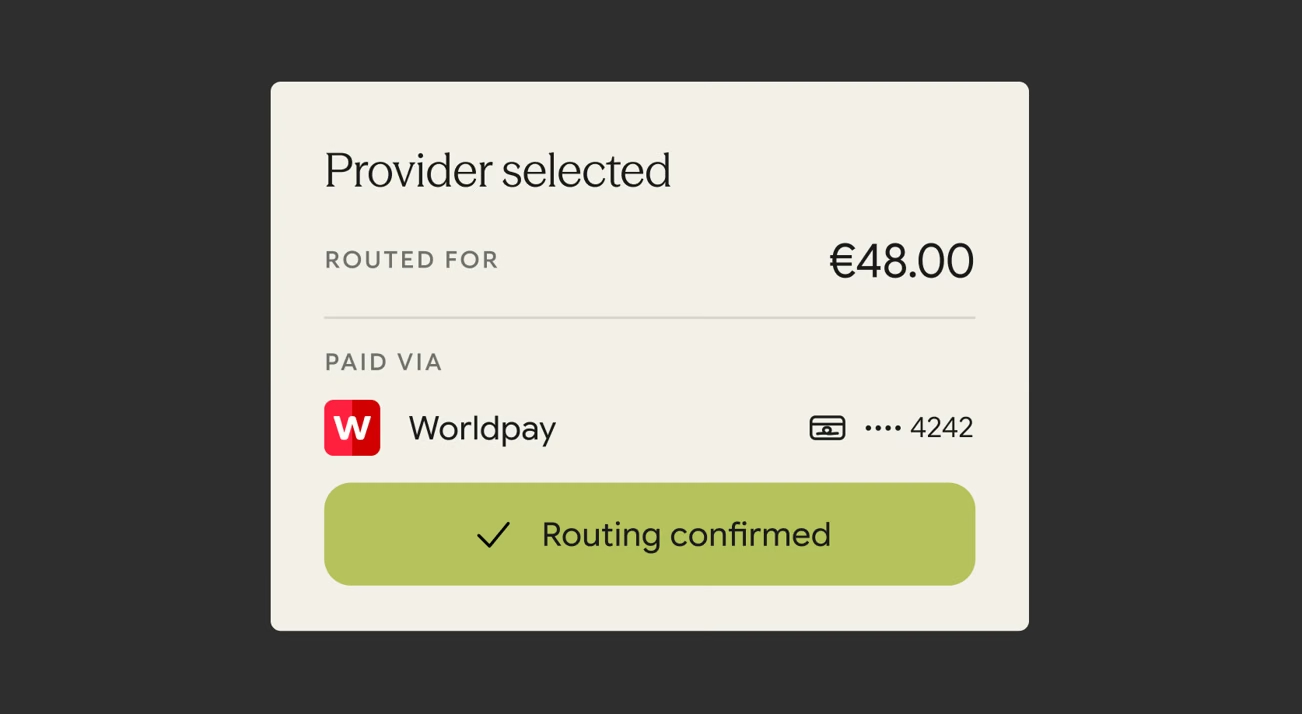
Provider selected
The payment goes where your rules point it.
Trust you can check.
PCI DSS Level 1
Independently certified for card security.
Data protection & Privacy
Built for UK and EU privacy rules.
Fraud & Risk Checks
Suspicious payments flagged. Good ones keep moving.

Explainable AI
Each decision explained, each action on record.
You know your industry. We know how it pays.
Routing, methods and retries tuned to your business, so more of your payments go through.
eCommerce

Marketplace

Fintech & Crypto

Digital Entertainment

Travel
FAQ
Payment costs, fees and routing, answered.
What makes up the cost of accepting a payment?
More than the headline rate. A card payment usually carries interchange (set by the card schemes and paid to the issuing bank), scheme fees and your provider's own margin. On top of that come cross-border and currency fees, fraud and chargeback costs, sales lost to declines, and the engineering time spent maintaining integrations. Routing gives you a say over the parts that depend on which provider, acquirer and method handles the payment.
How does routing lower payment processing costs?
Routing rules decide which connected provider handles a transaction. Add cost as a factor next to geography, currency, amount, method and provider performance, and transactions can go to a lower-cost route that still suits them. If that route declines, the payment can cascade to another provider instead of failing outright.
Can I cut costs without switching or adding providers?
Often, yes. If you already work with more than one provider, routing by cost between them is a quick place to start, along with offering the local methods they already support. Adding providers later gives you more routes to choose from, through the same integration.
Do local payment methods cost less than cards?
Often, yes. Bank payments and many local wallets carry lower fees than card payments, and customers in their home markets tend to trust them. The difference varies by market, method and provider contract, so it is worth checking your own rates for each one.
How do cross-border fees affect my payment costs?
When the card's issuing bank and the acquirer are in different regions, extra cross-border fees and currency conversion charges usually apply. Routing foreign cards to a local acquirer, where one is connected, can reduce or remove that premium.
Will routing by cost hurt my approval rates?
It can, if cost is the only thing your rules look at. A cheaper route that declines more costs you the sale. That is why cost-based routing runs with cascading: if the cheaper route declines an eligible payment, it goes to another provider.
Does using more than one provider mean more work for my team?
Not when they all run through one integration. New providers plug into the setup you already have, with routing, failover, refunds and reporting ready, so your engineers are not building and maintaining a separate connection for each one.
How do saved cards affect my negotiating position with providers?
When saved cards are stored with a provider, leaving them usually means losing them, and your customers have to re-enter their details. Cards stored in your own vault, as tokens that work across your connected providers, let you move volume without losing customers. That gives you real bargaining power when rates are on the table.
How much does payment orchestration cost?
Pricing depends on your payment volume, markets and setup. Book a call and get a quote based on how your business actually takes payments.
Will I pay another fee on top of my provider fees?
Your provider fees stay as agreed in your contracts with those providers. Upprove provides payment orchestration technology. Payment processing, acquiring and settlement are provided by the merchant's contracted payment providers. Upprove does not receive or hold merchant settlement funds. For how orchestration pricing works for your setup, book a call.


Let’s make getting-paid cost less.
We’ll show you where your payment costs are hiding, and how cost-based routing and local methods can bring them down.