From deposit to withdrawal, you set the rules.
Card deposits get declined, providers go down, and each new rail means another integration. Connect your card, bank and wallet providers once, route by your own policy, and give a failed deposit another route.

Your providers, finally all on the same team.








Scale, stay up, stay audit-ready.

One record your compliance team can follow
Answer the hard questions from one place instead of five portals. Attempts, routes, refunds and provider responses stay together, explained in plain language, and each action is tied to a named person.

Add a rail, skip the rebuild
A new card, bank or wallet provider plugs into the integration you already have. Routing, failover, refunds and reporting come ready from day one.

One provider down, deposits still in
A decline or outage on one provider can cascade the deposit to another. A struggling provider comes out of rotation until it recovers.

650+
Built around the moments money comes in and goes out.
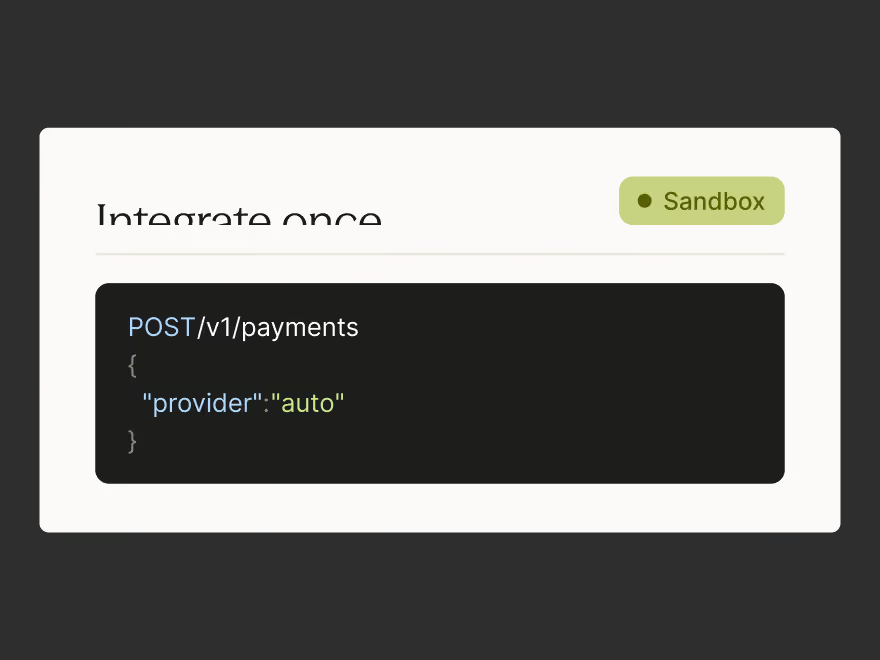
One API for all your providers
One server-to-server API, signed requests, webhooks and a sandbox to test in. Your engineers integrate once, instead of maintaining a separate connection for each provider.
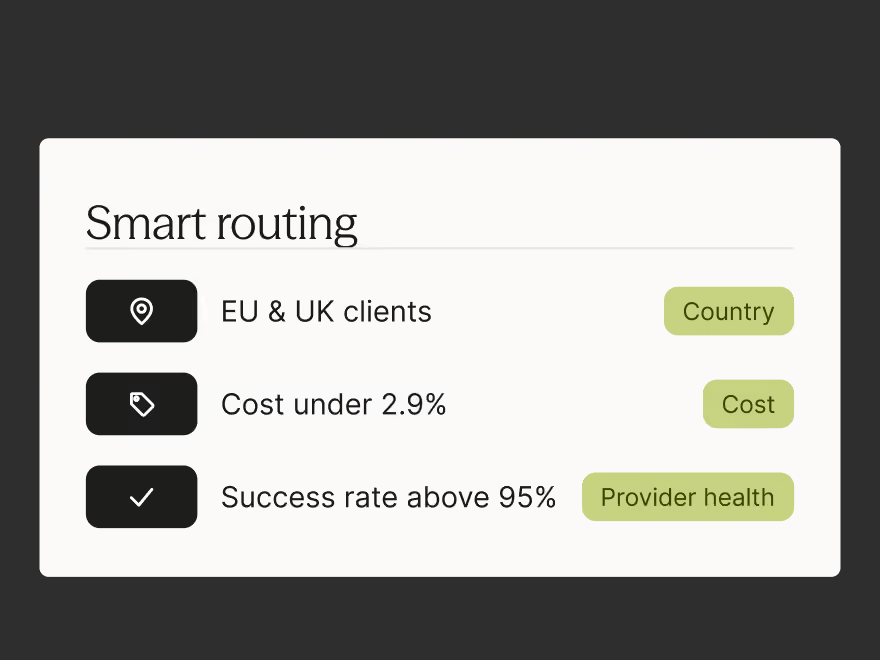
Smart routing, by your own policy
Set rules in a visual builder by transaction type, market, currency, method, amount, cost and provider performance. Deposits, withdrawals and different risk levels can each follow their own path, with no code changes.
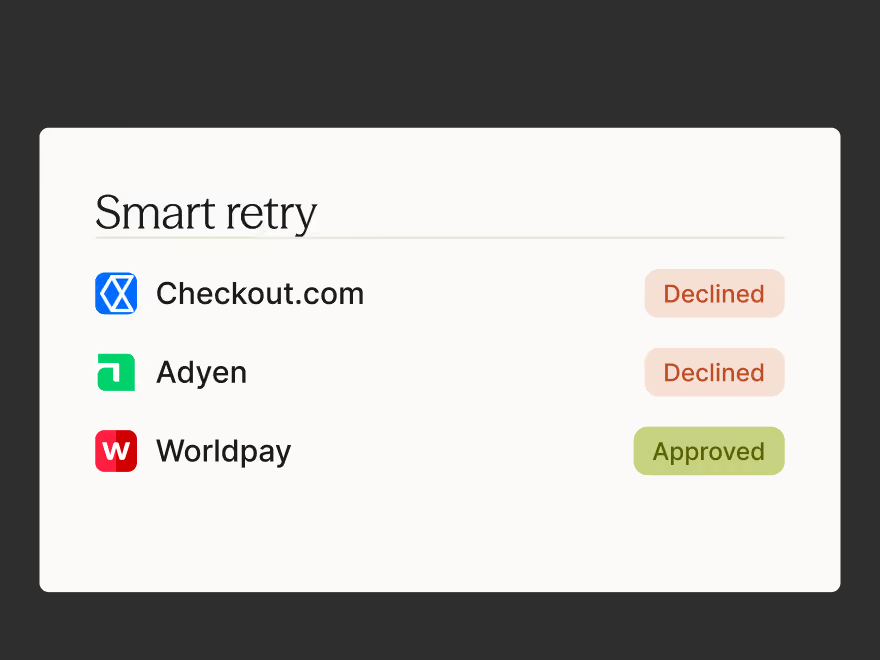
Smart retry and failover for deposits
After a decline or outage, eligible deposits can cascade to another connected provider. Circuit breakers take a failing provider out of rotation, so one bad hour stays contained.
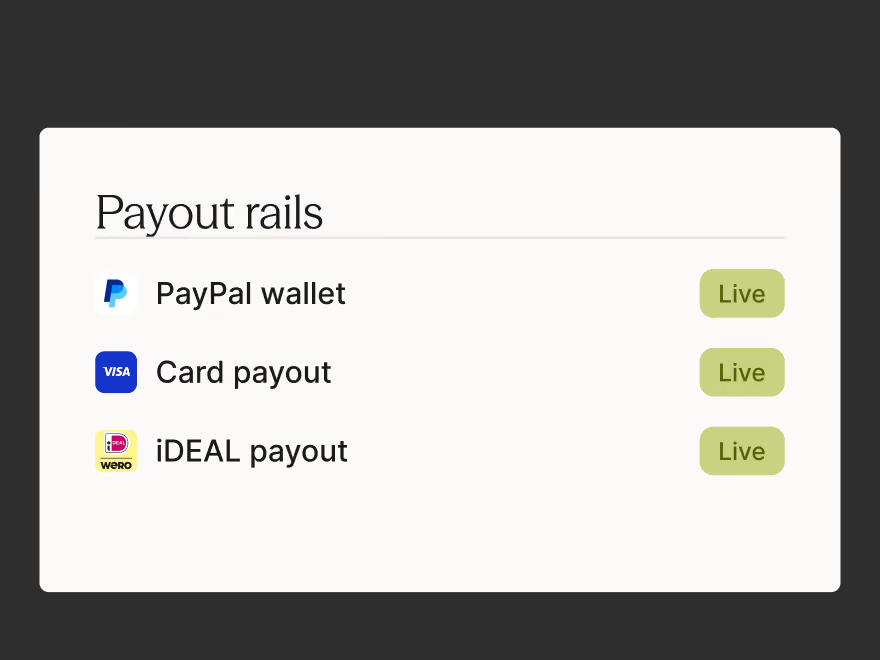
Payouts and refunds, all through one integration
Refunds and payouts both run through the same integration, across all your providers. Each payout has a tag so it is never paid out twice by accident.
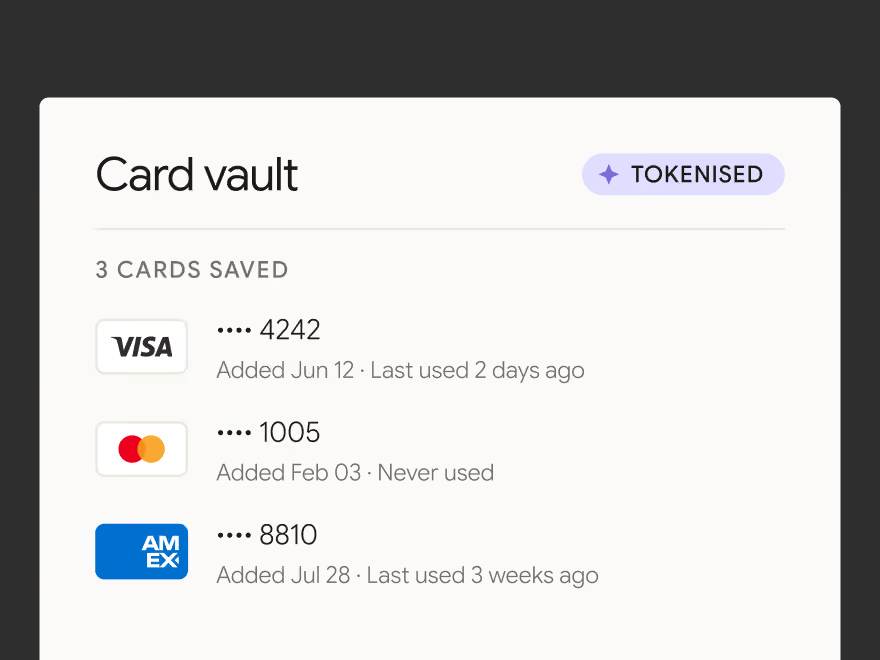
Card tokens that stay current and portable
Cards are stored once as tokens outside your systems, and update automatically when they expire or are replaced. The tokens work across your connected providers, so you can change or add one without asking users for their cards again.
Trust you can check.

PCI DSS Level 1
Independently certified for card security.
Data protection & Privacy
Built for UK and EU privacy rules.

Fraud & Risk Checks
Suspicious payments flagged. Good ones keep moving.

Explainable AI
Each decision explained, each action on record.
FAQ
Deposits, withdrawals, compliance and control.
What is payment orchestration for fintech and crypto platforms?
It is a technology layer that connects your payment providers through one integration. It routes deposits and withdrawals across them using factors like market, currency, cost, provider performance and your own rules, and it can retry a failed payment on another provider.
Do we need to replace our current payment providers?
No. Your contracts stay yours. Your existing providers connect through one integration, and you can add or remove providers when the terms suit you.
Does Upprove hold or settle our funds?
No. Upprove provides payment orchestration technology. Payment processing, acquiring and settlement are provided by the merchant's contracted payment providers. Upprove does not receive or hold merchant settlement funds.
Why do card deposits on crypto platforms get declined so often?
Many card issuers treat crypto purchases as higher risk, which can mean more declines and extra authentication steps. With a single provider, a decline ends the deposit. With several providers and methods connected, such as bank payments and wallets, a declined deposit can be routed to another option.
Can we use different providers for deposits and withdrawals?
Yes. Card, bank and wallet providers can handle deposits, while withdrawals go out as payout instructions to your chosen payout providers. Both run through the same integration and show up in the same record.
Can we route payments differently by risk level or transaction type?
Yes, by the attributes of the payment: market, currency, amount, payment method, card BIN or brand, and customer country. Deposits and withdrawals take separate paths, and each rule can prefer the lowest-cost or best-performing provider, all without code changes.
What happens if one of our payment providers goes down?
Eligible payments can cascade to another connected provider, and a failing provider is taken out of rotation until it recovers. Your users see the deposit carry on.
How does payment orchestration affect our PCI DSS scope?
Card data is stored in a vault built so your systems never touch raw card numbers, which keeps your compliance burden as light as possible. The card environment is isolated and certified to PCI DSS Level 1.
Where is our data stored?
Data is kept within the EU, which helps you meet UK and EU privacy requirements.
Can our compliance team trace what happened to a transaction?
Yes. Each transaction has one record covering attempts, routes, provider responses and refunds, so you can answer audit questions without logging into several portals.


Let’s get more deposits in, on your rules.
Retries when a deposit fails, routing by your own policy and the ways your users like to pay, all through one integration.