More payment providers. Less engineering work.
Each new payment provider means another API to learn, another set of webhooks to handle and another integration to keep alive. Integrate once, add providers behind it, and let your team get back to building your product.

One integration. Every provider you already trust.








Payments keep eating your sprints.
The first integration looks finished the day the first payment goes through. Then the provider updates its API, a webhook goes missing, finance asks why a refund failed, and someone on your team drops what they were doing to dig in.


Your code talks to one API. We handle the provider quirks.
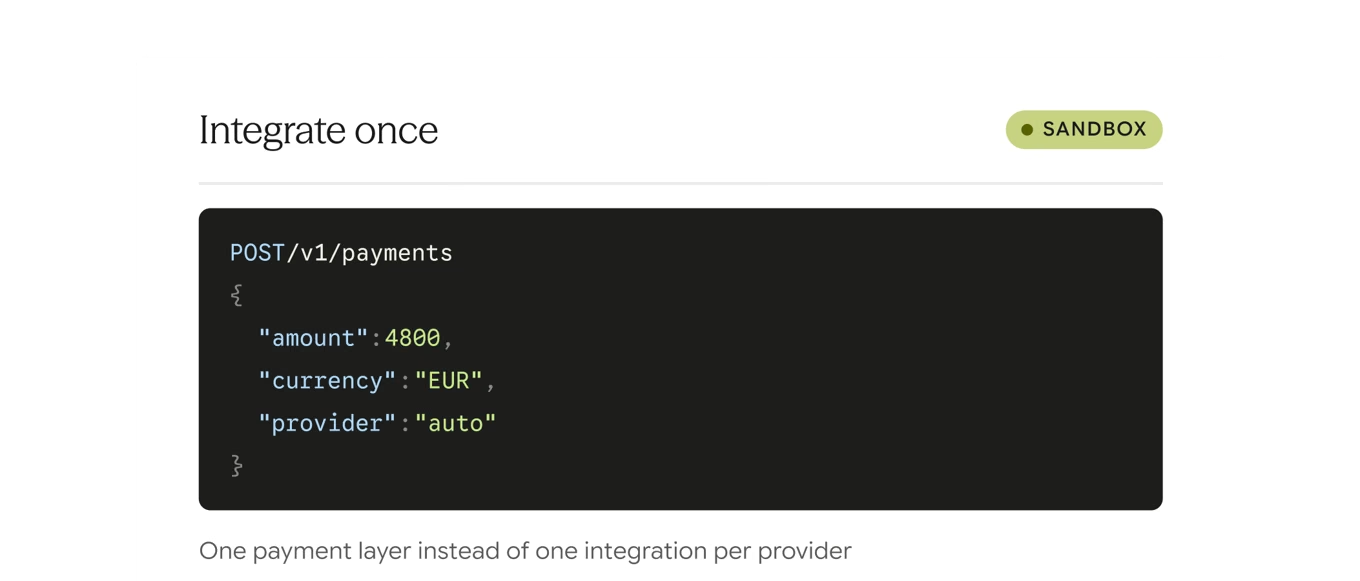
Build it once
Connect through a server-to-server API or a hosted checkout, and test the full flow in a public sandbox before you go live.
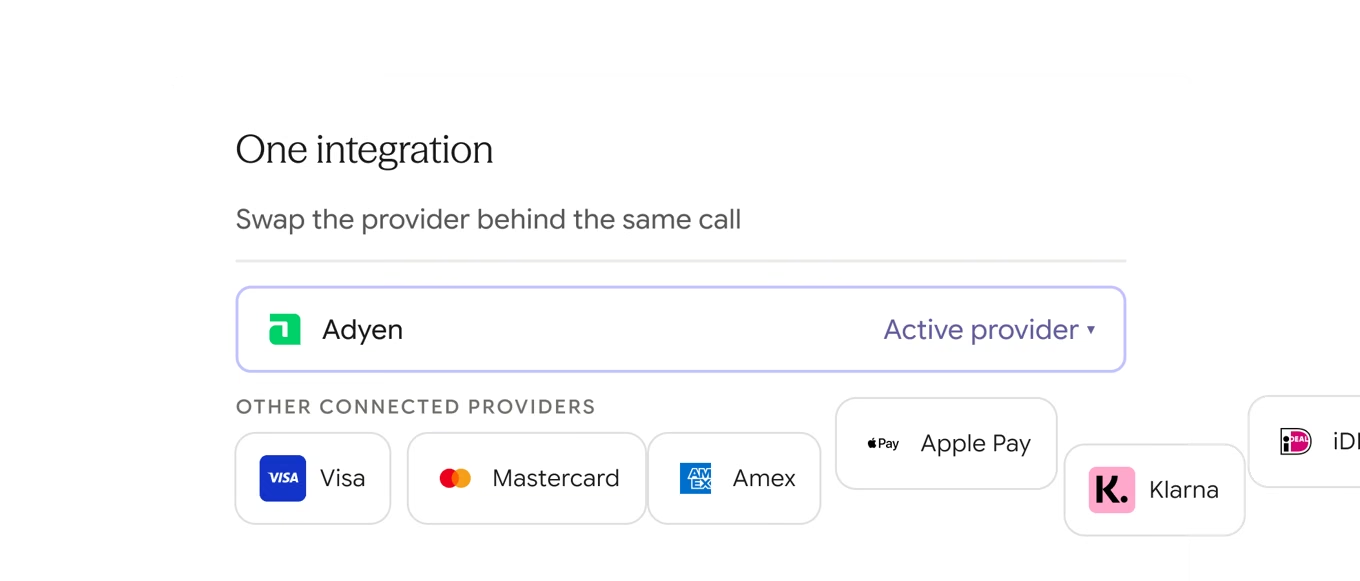
Add providers without touching your code
New providers join the integration you already have, with routing, failover, refunds and reporting in place. The providers change. Your code stays put.
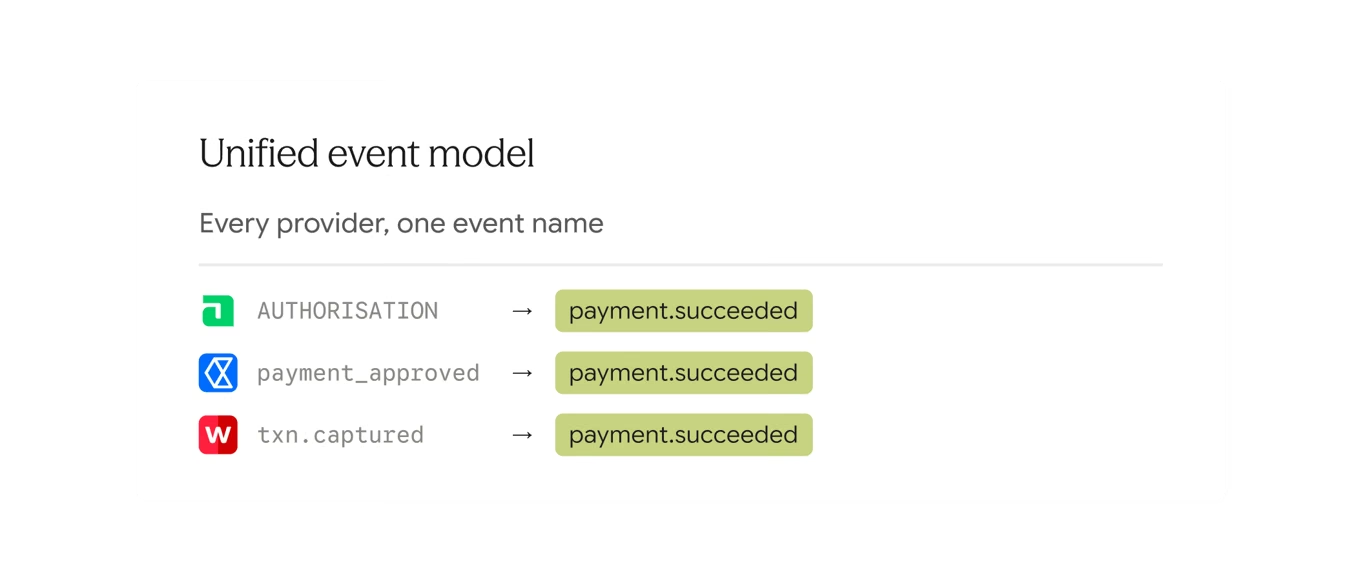
Read one version of the truth
Whichever provider handled the payment, your systems get the same event names and one consistent payment history. Nothing to map for each provider’s version of ‘payment succeeded’.
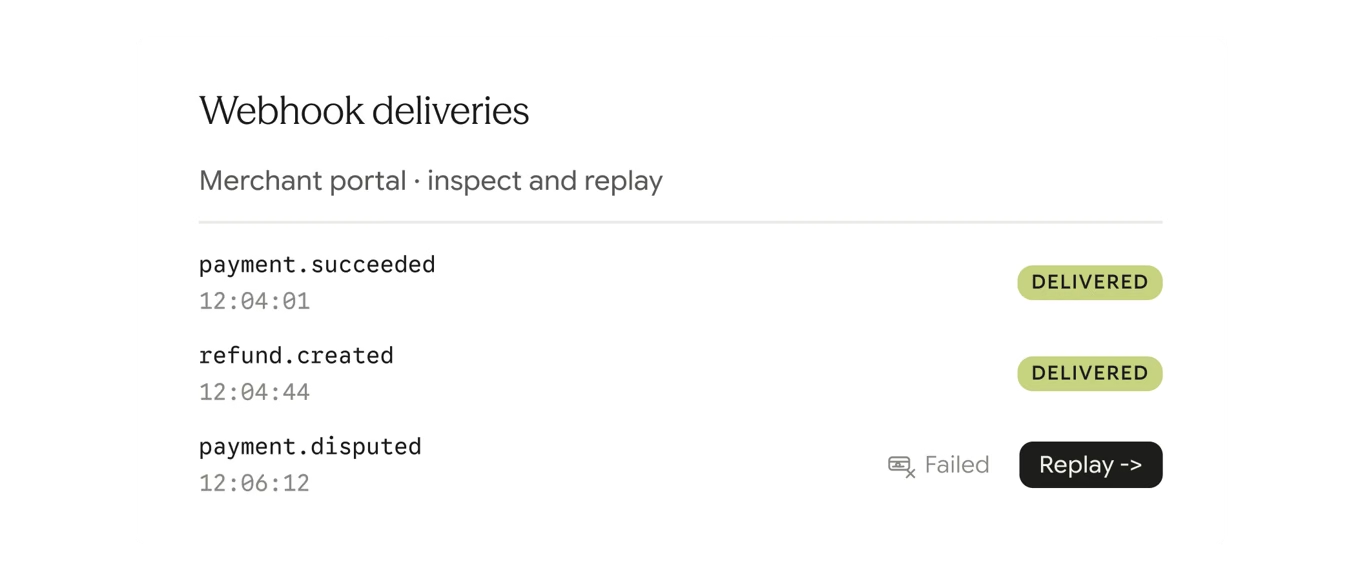
Sort it without a ticket to engineering
Your payments, finance and support teams can see why a payment was declined, adjust routing in a visual builder and replay webhook deliveries, all in the merchant portal. Fewer interruptions for the people writing your code.
See the integrations your team gets to skip.
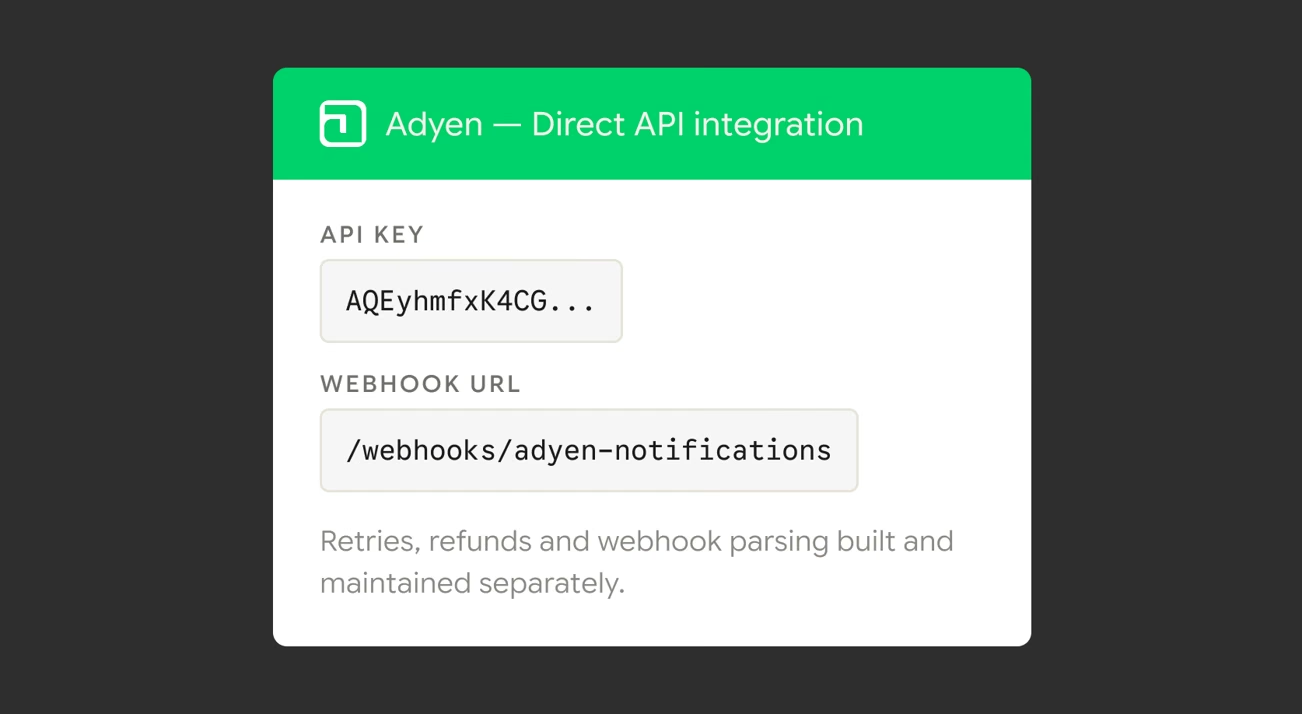
Provider A integration
Its own API, webhooks and refund logic to build.
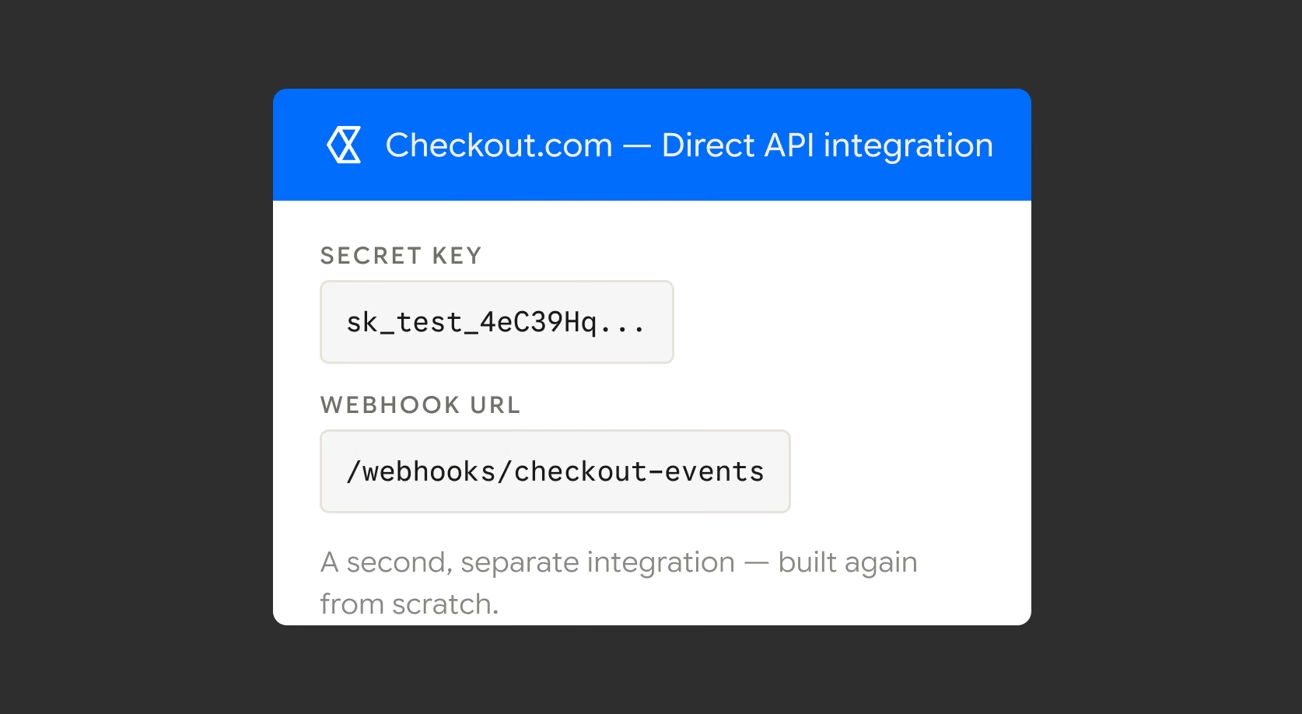
Provider B integration
The same work again, in a different format.
12:04:32
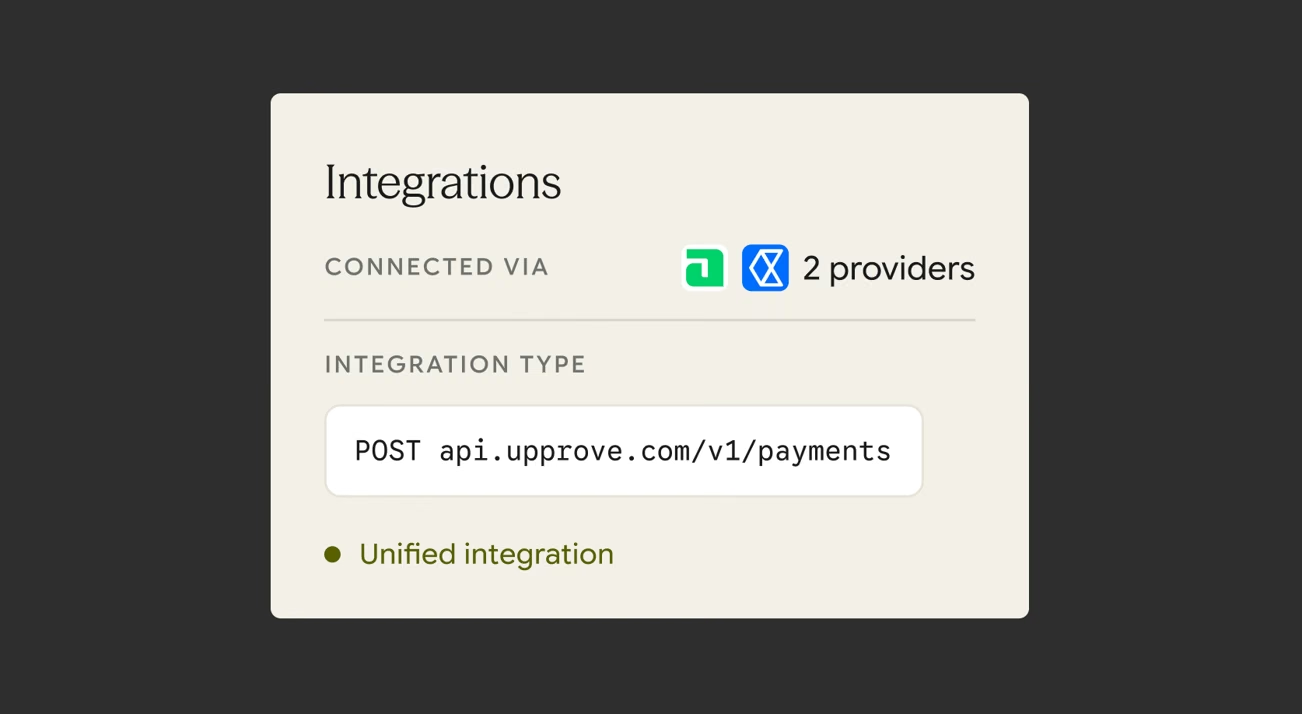
One integration
Routing, retries, refunds and webhooks, built once.
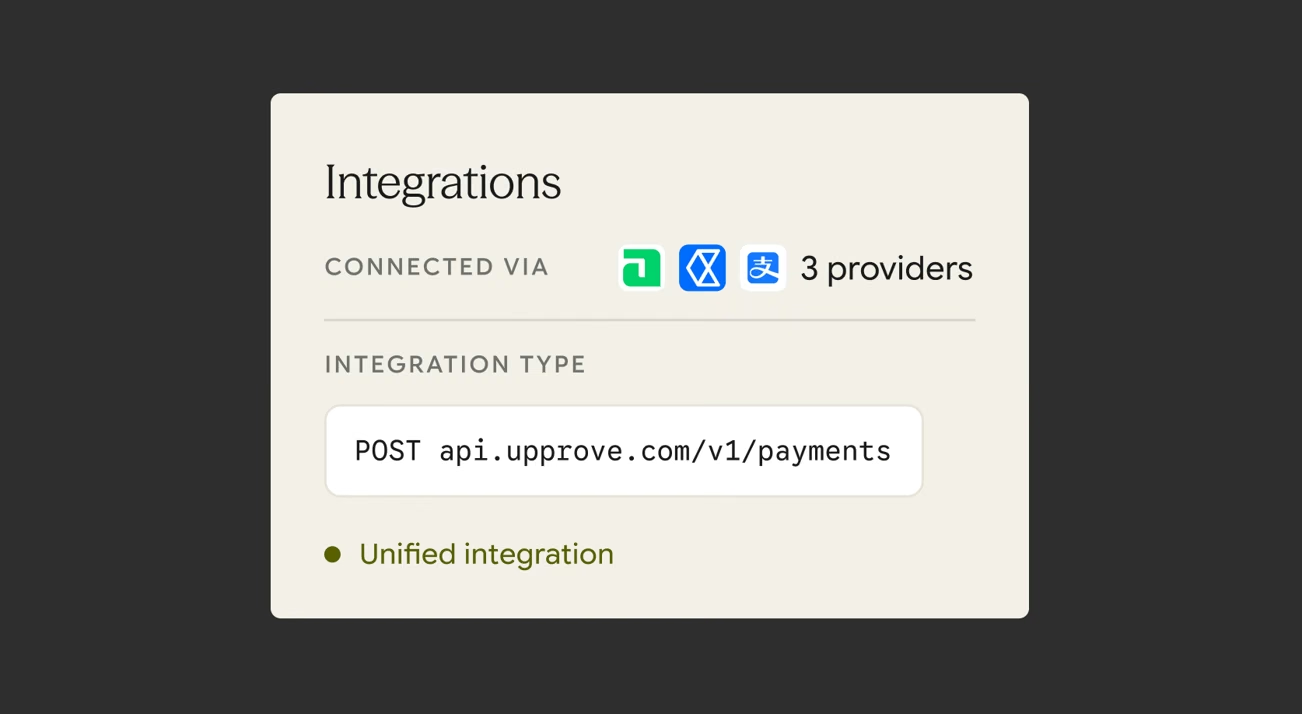
New providers connect behind it
Nothing new to code on your side.
Trust you can check.

PCI DSS Level 1
Independently certified for card security.
Data protection & Privacy
Built for UK and EU privacy rules.

Fraud & Risk Checks
Suspicious payments flagged. Good ones keep moving.

Explainable AI
Each decision explained, each action on record.
You know your industry. We know how it pays.
Routing, methods and retries tuned to your business, so more of your payments go through.

eCommerce

Marketplace

Fintech & Crypto

Digital Entertainment

Travel
FAQ
Integration, maintenance and what your team no longer has to own.
How long does it take to integrate?
It depends on your setup. The hosted checkout is the lighter route, while the server-to-server API gives you more control over the flow. Public docs and a sandbox let your team build and test before going to production. Book a call and you will get an estimate based on your stack.
Do we have to replace our current payment providers?
No. You keep your existing provider contracts and connect those providers, where we support them behind the one integration. Payment processing, acquiring and settlement stay with your contracted providers.
How much engineering work does adding a new provider take?
If the provider is already supported on the platform, adding it is a setup step with no new build behind it. It comes with routing, failover, refunds and reporting already in place, and your code does not change. The provider's own onboarding and contract still apply.
What happens when a provider changes its API?
Provider connections are maintained on the platform side, so your integration stays the same. Your team does not need to track each provider's release notes or version changes.
Can we move across gradually?
Yes. You can start with one provider, one market or one part of your traffic, and move more across when you are ready.
Does this reduce our PCI DSS scope?
Using the hosted checkout and card vault keeps raw card data off your servers, which usually means a lighter PCI DSS scope for your team. Your exact scope depends on how you integrate, so it is worth confirming with your QSA.
What happens if a provider goes down?
Payments can cascade to another connected provider, and a failing provider can be taken out of rotation until it recovers. Nobody on your team needs to push a hotfix to make that happen.
How do webhooks work across different providers?
Events from your providers come through in one standard webhook format. If a delivery fails, your team can check it and resend it from the merchant portal.
Does Upprove hold our funds?
Upprove provides payment orchestration technology. Payment processing, acquiring and settlement are provided by the merchant's contracted payment providers. Upprove does not receive or hold merchant settlement funds.


Let’s give your sprints back to your product.
Leave the provider integrations to us, and keep your engineers on your product.